



Key Points

- More than one-third of streaming households are paying for a sports-specific app to stay on top of their favorite teams or games.
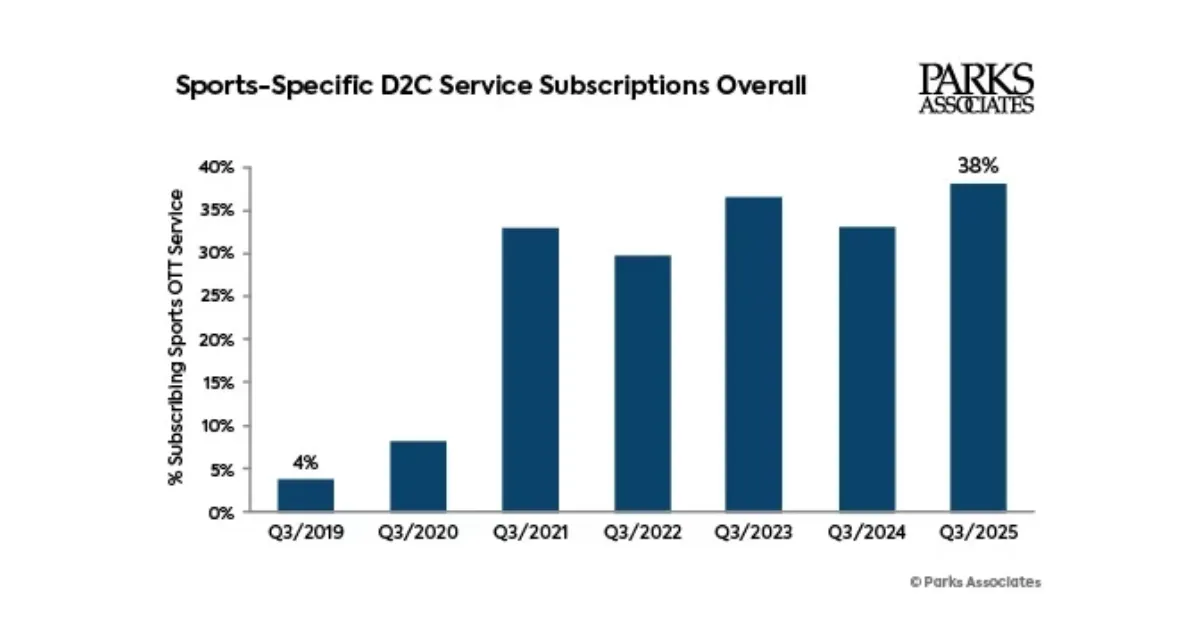
- The number of sports fans paying for apps to watch live games has risen sharply since 2019, when Parks Associates reported 4% were doing so.
- Over the years, streaming apps have beefed up their offering of live sports to entice fans to their premium services.
More than one-third of streaming households in the United States have purchased a subscription to a sports-specific service in the past year, according to new research released by Parks Associates.
The data, based on new research that will be released at Parks Associates’ “Future of Video” show in California next week, shows a sharp rise in the number of streaming households that have purchased a sports-specific service or app since 2019.
Then, only 4 percent of streamers said they were watching content through a sports-specific app — a number that now stands at 38 percent.
Over the past six years, more sports apps have hit the market, with some clinching lucrative rights away from traditional broadcast and cable networks. DAZN, best known for offering live premium sports outside the United States, has beefed up its offering stateside, while other apps and plans like ESPN Plus, ESPN Unlimited, Paramount Plus, Peacock and Fox One have leveraged their live sports rights to entice consumers into their services.
Other apps, like Netflix and Amazon’s Prime Video, have chipped away at traditional TV’s leading position as the dominant platform for premium sports like professional football, baseball and basketball games by grabbing their own share of TV rights when they are available. Netflix and Prime Video will both offer football games during the holidays this year, and Prime Video recently started offering nationally-televised games from the National Basketball Association (NBA) as part of a multi-year deal with the league.
Michael Goodman, a senior contributing analyst at Parks Associates, said streaming sports apps and channels offer enhanced abilities that broadcast and cable networks typically lack. Some of those features include on-demand scores, live wagering odds and multi-view windows — all of which have become more common on sports-filled streaming apps in recent years.
“Sports have become the backbone of live-streaming adoption,” Goodman said on Tuesday. “The ability to deliver interactive, data-driven, and personalized experiences is changing how audiences connect with their favorite teams and leagues. Our research illustrates the huge potential for new monetization models as engagement deepens across connected screens.”
Households with robust broadband Internet connections are also more likely to watch sports on streaming and other platforms compared to those who still use traditional forms of television. On average, U.S. broadband Internet households watch 4.2 different sports when they are in season, from professional athletic competitions to college-level tournaments.
The NFL is the most-dominant sport on traditional and streaming television. Second to the NFL, more than half of broadband households watch college football, 53 percent follow Major League baseball (MLB) and 46 percent tune in to NBA games, Parks Associates said.
Prior research released by Parks Associates found sports fans are willing to shell out quite a bit of cash to follow the action across different platforms, with the average American household paying $110 per month to watch live games across broadcast channels, cable networks and streaming services.
In households with sports fans, 30 percent pay for a mixture of traditional TV and standalone streaming apps, while 40 percent are watching sports on streaming platforms alone, Parks Associates said.

Goodman will outline more of the firm’s findings during a presentation at Future of Video on Wednesday, November 19 at 10 a.m. The event runs from Tuesday, November 18 through Thursday, November 20 at the Marriott in Marina del Rey.