

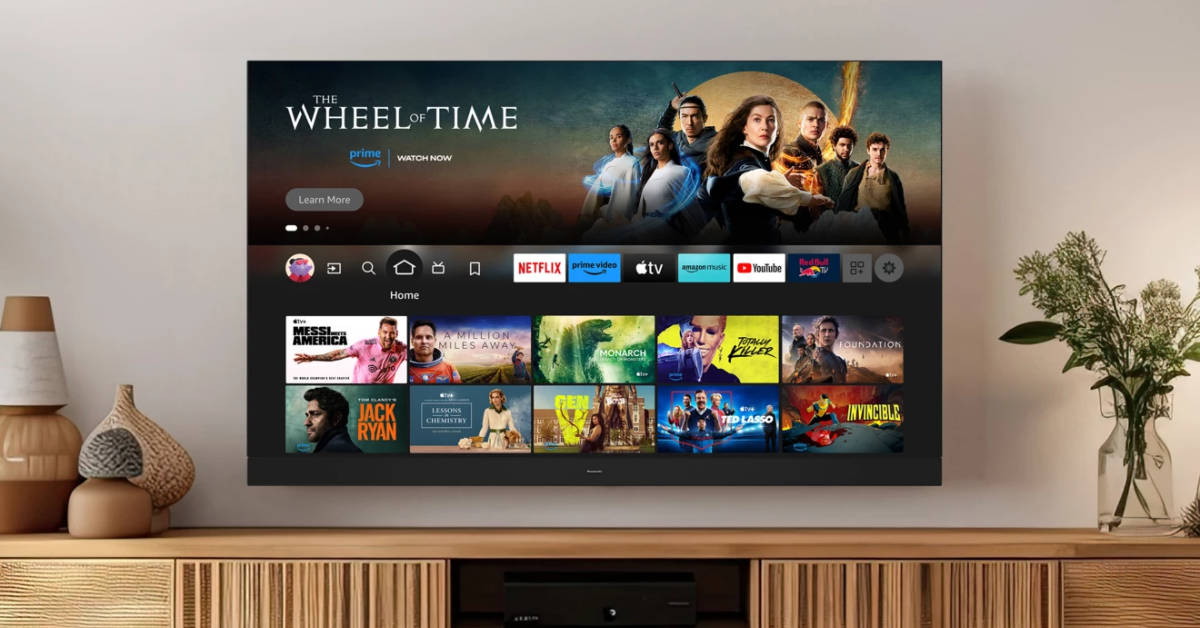
Amazon’s advertising business was one of many bright spots in the company’s second quarter (Q2) earnings report released on Thursday, boosted by higher interest in the company’s connected TV ad offerings.
Advertising services revenue rose to $15.7 billion in the three months ended June 30, an increase of 23 percent from the $12.8 billion Amazon earned last year. The segment also climbed 13 percent from the first quarter of 2025, when Amazon booked $13.9 billion in advertising revenue.
During the quarter, Amazon announced a new partnership with Roku that allows ad buyers to launch campaigns across both platforms. Together, Amazon and Roku account for 80 percent of the domestic streaming device marketplace, and both have an outsized share of the connected TV platform space overall.
“Amazon’s advertising business continues to be a bright spot in our overall portfolio, benefiting from the increased engagement we’re seeing across our shopping and media platforms,” Andy Jassy, Amazon’s CEO, remarked on Thursday.
Jassy further highlighted the company’s ongoing investments in artificial intelligence and automation, including AI tools designed to enhance ad targeting and optimize retail listings.
Overall, Amazon reported net sales of $167.7 billion for the quarter, up 13 percent year over year, with operating income climbing to $19.2 billion from $14.7 billion a year earlier. The company’s net income reached $18.2 billion, or $1.68 per diluted share, compared with $13.5 billion, or $1.26 per share, in the prior-year period.
Advertising now represents a critical component of Amazon’s service revenue base, which also includes its third-party seller fees and subscription services such as Prime. Analysts have increasingly pointed to Amazon’s ad business as a driver of profitability, as the segment typically carries higher margins than the company’s core retail operations.
Prime Video doesn’t just help Amazon’s own connected TV ambitions — it is also a proven driver of subscriptions to smaller, niche streaming platforms.
During a press event last month, measurement firm Antenna said Amazon’s streaming marketplace Prime Video Channels was responsible for one-quarter of all new streaming subscription activations during the first quarter of the year.
The event was on an invitation-only basis — only a handful of media trade publications were allowed to attend — but the comments were backed by prior research from Antenna and others that prove the power of Prime Vidoe Channels to drive interest to smaller streaming services.
Paul Larbey, the CEO of Bango, said Prime Video Channels is a powerful driver of streaming subscriptions because it gives Amazon shoppers a convenient way to start and stop their video plans from a single platform. Content from subscriptions purchased through Prime Video Channels is served within the Prime Video app itself, which eliminates the need to download, install and switch between other apps.
“It works because consumers want simplicity,” Larbey said in a statement over email. “Bundling allows one place to manage everything, with better deals and longer trials than going direct.”
Bango’s own research indicates more than four-fifths of subscription leaders are investing more effort into offering their products through marketplaces like Prime Video Channels. Bango allows service providers to launch their own marketplace offerings through technology called the Digital Vending Machine, which hooks into popular services like Netflix, Disney Plus, HBO Max, SiriusXM, Peacock, Paramount Plus, Fox Nation, Nord Security and Uber One.
“To grow subscribers and fight churn, it’s better to join forces than compete,” Larbey said.