


Key Points

- Local TV broadcasters and cable networks should see a $4 billion windfall from political advertising next year, BIA Advisory Services Managing Director Rick Ducey said.
- Stronger streaming competition and onerous regulations are challenging broadcast TV growth strategies heading into 2026.
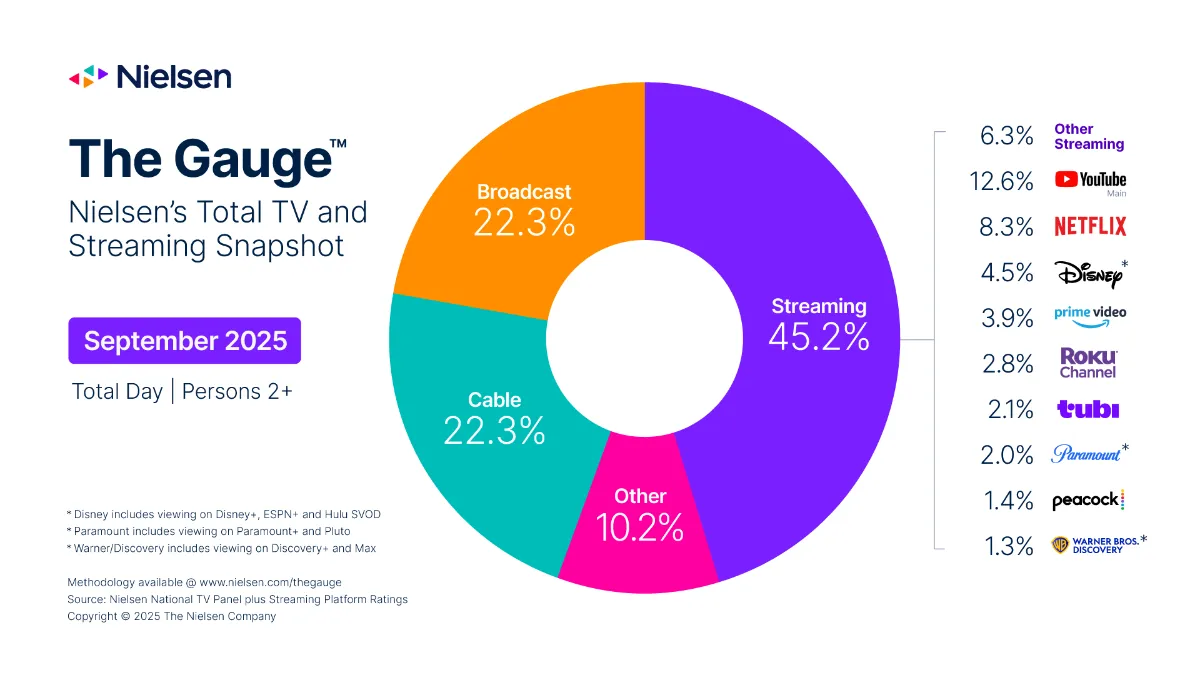
- Traditional linear TV typically accounts for around 40% of all time spent with TV in a given month, per Nielsen reports.
Television broadcasters are being confronted with a complicated mix of economic, regulatory and technological factors that is impacting their ability to plan for next year, a financial analyst affirmed during a conference this week.
Speaking at the NAB Show New York, BIA Advisory Services Managing Director Rick Ducey said the near-term outlook for the broadcast TV industry remains positive, especially as broadcasters brace themselves for an onslaught of political advertising spend heading into next year’s midterm elections.
Competition from streaming services will remain strong, as viewers shift away from expensive cable and satellite TV packages toward relatively-cheaper TV apps that allow them to watch live programming across multiple devices and start shows and movies on their own schedules.
Traditional linear broadcast and cable networks have maintained around 40 percent share of time spent with TV each month over the past few quarters, according to an analysis of Nielsen’s “The Gauge” reports by The Desk. Streaming platforms have occasionally leapfrogged traditional linear TV in some months, though streaming’s share of TV time is reduced considerably when YouTube is factored out of the equation.
As viewers shift to streaming apps, marketing dollars are moving in that direction as well, but traditional TV is still expected to take the bulk of local TV ad dollars in 2026. Political advertising is one category that continues to embrace traditional TV over streaming: Ducey says local TV and cable networks should grab around $4 billion in political advertising dollars next year, while connected TV platforms and streaming apps grab around $1 billion and social media takes in another $1.2 billion.
Those projections come as analysts weigh several unknowns that could affect campaign spending. A pending Supreme Court case could ease restrictions on political fundraising and spending. At the same time, ongoing redistricting could reshape the competitiveness of local races, and party strategists are still fine-tuning messaging strategies for the 2026 cycle.
Despite periodic boosts from political campaigns, traditional local broadcast television continues to lose share to digital competitors. Core local TV spending fell from $15.6 billion in 2023 to $14.9 billion in 2024 and is projected to drop even further to $14.3 billion by the end of this year. That amount will go even lower next year, with Ducey and BIA projecting $13.9 billion in core local TV advertising revenue by the end of 2026.
The lower anticipated TV advertising revenue tracks a revised forecast issued in August, through which BIA Advisory warned local ad spending across all platforms was likely to clock in lower this year. The revised figure put core and political ad spending around $169 billion, down from an earlier forecast of $171.4 billion, with tariffs and other macroeconomic factors chipping away at marketing budgets.
Among local advertising categories, real estate led growth in the past year, up 10.4 percent to $6.1 million, Ducey said. Restaurants followed with a 7.8 percent increase to $15 million, while finance and insurance rose 4 percent to $23 million. Retail grew 3 percent to $25.2 million and automotive increased 1.4 percent to $11.9 million.
Although automotive spending remains below pre-pandemic levels, Ducey noted the industry continues to rank among the top local growth sectors. Other categories showing declines included media, healthcare, pharmaceuticals and general services.
The pharmaceutical sector has historically been a major TV advertiser, but it faces ongoing challenge from federal regulators who want to restrict drug advertising on TV. Last month, President Donald Trump signed a directive that orders the U.S. Department of Health and Human Services and other agencies to ramp up their enforcement of regulations concerning drug and medical advertisements. Shortly after the order was signed, the Food and Drug Administration (FDA) said it was cracking down on deceptive advertising, sending more than 100 cease-and-desist letters to pharmaceutical firms over their problematic campaigns.