


On any given weeknight, promptly at 7 p.m., hundreds of thousands of Americans sit down in front of the television set to watch the goings-on at the 4077th Mobile Army Surgical Hospital in Uijeongbu, South Korea.
The show, “M*A*S*H,” hasn’t produced a single new episode since 1983 — the same year its finale was viewed by more than 105 million people in the United States. But the program still draws a strong amount of interest from Americans who have rediscovered Hawkeye and the gang as viewers incorporate more free broadcast TV into their media diets.
During a single week in October, rebroadcasts of M*A*S*H at 7 p.m. attracted 764,000 viewers over the age of two and its double-header episode at 7:30 p.m. pulled in 789,000 viewers, according to Nielsen data reviewed by The Desk.
More than 200 local TV stations across the country continue to air M*A*S*H each week on digital broadcast TV through their affiliation with MeTV, a network owned by Weigel Broadcasting. The network started as a multi-hour vintage programming block on a single Chicago-area TV station and has since grown to the modern equivalent of a super station — similar to the one Ted Turner built in the 1970s with WTBS (Channel 17) in Atlanta.
Neal Sabin, the Vice Chairman of Weigel Broadcasting, says MeTV broadcasts more than 60 shows during the week, making it the network with the largest schedule of unique programs in the country. Each show is selected for its ability to withstand the test of time — the show must be character-driven, have good story lines and resonate with older and younger viewers alike.
“Classic is one of the most overused terms in television — classic is a euphemism, in a lot of cases, for old,” Sabin said in an interview with The Desk. “Shows like Andy Griffith and M*A*S*H, those are true classics. They were written amazingly well. They’re very different shows — they have characters that are timeless and memorable, and they offer a consistent escape from the world today — and that is part of what makes MeTV work really well.”
Weigel’s calculated strategy in licensing timeless, memorable TV programs has earned MeTV millions of fans across the country, many of whom follow the network across social platforms and engage with it as they would a celebrity or band.
The network’s fandom is so strong that when a local broadcast affiliate is knocked off the air or decides to switch affiliations, viewers get upset.
“They (the stations) will confide in us that they get more calls asking, ‘Where’s my MeTV?’ than ‘Where’s my NBC?'” Sabin said. “Our schedule is pretty static, and people expect to see Bonanza on MeTV at a certain time, just as they have for the past 15 years.”
If a local broadcaster decides to switch away from MeTV, it is often to their detriment: Sabin notes that the network offers a national feed — which is near-identical to its local TV schedule — that is available on satellite platforms Dish Network and DIRECTV, and on low-cost streaming services like Frndly TV and Philo.
Once a local TV station loses a viewer to a national TV platform, it can be extremely hard to get them back. For this reason, given MeTV’s strong position in the market and its close relationship with viewers, most local stations that pick up the network stick with it for years. Today, MeTV clears all the major markets — on Weigel-owned stations in Chicago, New York, Los Angeles, San Francisco and Washington, D.C., and on stations owned by other broadcasters in the rest of the country.
“It’s a successful network because of distribution and how we program it,” Sabin proclaimed. He notes that the high ratings associated with MeTV’s library of memorable shows comes in spite of its lack of distribution on “the mighty YouTube TV,” the largest streaming cable-like service in the country.
“We scratch our heads as to why we’re not there sometimes, but we’ve managed to do this without them,” Sabin said.
In recent years, the MeTV branding has been used for two other Weigel-owned broadcast networks: The spillover channel MeTV Plus and the recently-launched MeTV Toons, the latter of which offers a non-stop marathon of retro animated shows from major studios like Warner Bros., Paramount, Universal Pictures and Sony Pictures.
MeTV Toons grew from similar roots as MeTV: As a programming block on the network, with cartoons airing Saturday mornings, just as they did on the Big Three networks decades ago. At first glance, MeTV Toons might come across as Weigel’s first foray into children’s programming. But MeTV Toons is not a network made for children — it certainly offers the same brand-safe shows that its two sister channels do, but the network is really geared toward adults who want to find the same solace in timeless animated shows, just as they do with live-action sitcoms and dramas on MeTV.
“MeTV Toons is the animated version of MeTV, bringing back nostalgic animated shows that appeal to Boomers and Millennials alike,” Sabin affirmed. “If you look at the schedule (of MeTV Toons), you can see the footprints of MeTV in there. It’s our youngest network in terms of demographics, but we don’t necessarily have kids watching it.”
The biggest challenge with licensing older TV shows for MeTV: There is a finite supply of them. Just as CBS is no longer airing new episodes of M*A*S*H, Paramount also isn’t producing new seasons of the Andy Griffith Show (which would be tough to do without Andy Griffith, who died in 2012), and NBC isn’t commissioning new episodes of Bonanza.
Weigel addresses this challenge in two ways. First, MeTV offers its own programming blocks that allows it to offer unique, differentiated programming originating from its channels in Chicago, including the long-running comedy-horror franchise “Svengoolie,” hosted by veteran broadcaster Richard Koz in the title role.
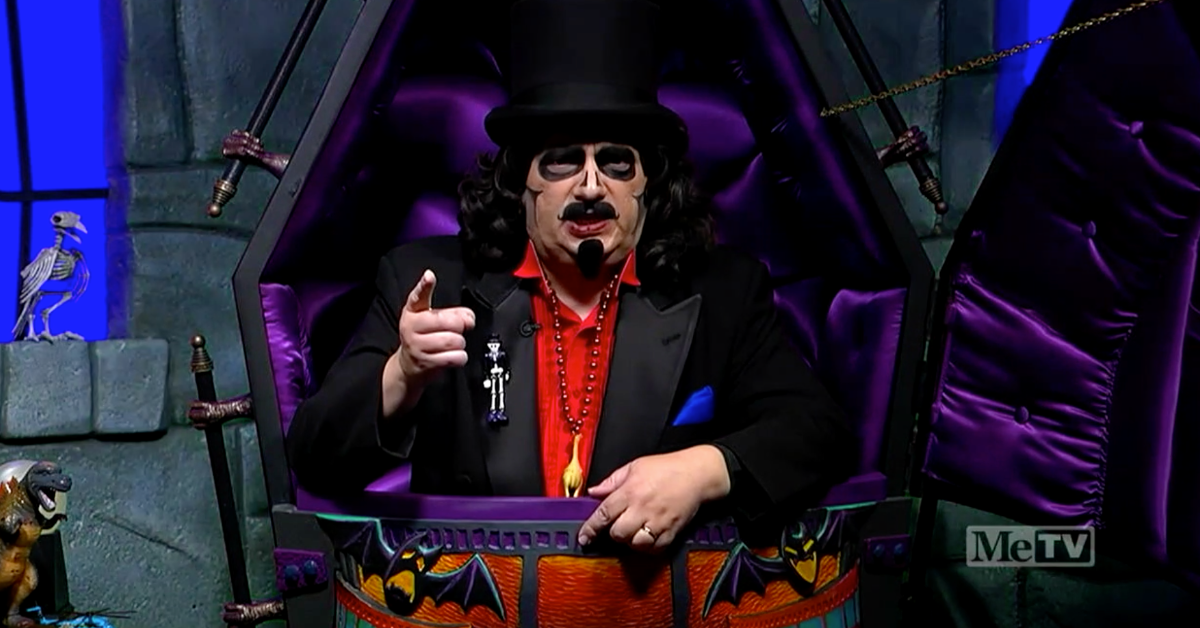
Hardcore MeTV fans are known to pore over the TV listings to find out what obscure film Svengoolie will present each week, and the show often rates among the top 200 broadcasts as measured by Nielsen. (During the October 20, Svengoolie’s special presentation of “The Fly” attracted 783,000 viewers, putting it ahead of some NCIS re-runs on Ion TV and even a NASCAR Xfinity Cup race aired on the CW Network.)
The second strategy is acquiring fresher shows for MeTV that have a more-recent run on network TV, but still fit within the mold of memorable, character-driven shows with timeless storylines — a strategy that Weigel is easing into, rather than going full steam ahead, Sabin said.
Viewers saw this strategy play out in October, when Weigel announced it had licensed the CBS sitcom “Everybody Loves Raymond” for Me TV, with the show placed in the 9 p.m. time slot. (It airs at 10 p.m. on Sundays.) Many long-time fans of MeTV found the addition of Ray Romano’s sitcom to be jarring: For days, Facebook was flooded with posts and comments from people who questioned why Weigel would pick up that show instead of trying to acquire any number of older shows that have never aired on the network.
“I told our staff, before Everybody Loves Raymond went on our air, we’re going to see a lot of people say, ‘Oh my God, you’ve sold out — you’re just like TV Land, you’re getting away from classic TV, you’re messing with my life,'” Sabin acknowledged. “The first thing I said is, that’s good — it shows that people really care, that they’re really engaged, and our advertisers should know that.”
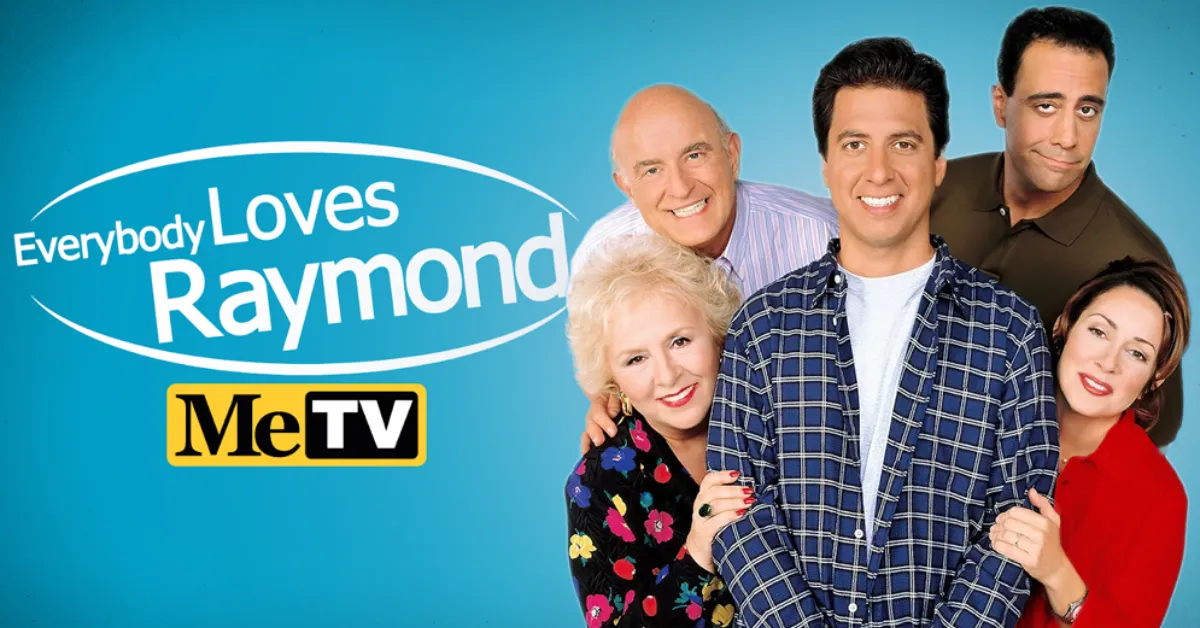
Sabin said he understood the reaction from viewers, but stood by his assertion that Everybody Loves Raymond complements other, older TV series that air on the network. While a vocal minority may have made the largest waves among MeTV’s fans, the ratings data shows people are responding positively to Raymond: The show’s launch on MeTV was strategically timed to coincide with the airing of a 30th anniversary retrospective on CBS, which attracted more than 6 million viewers and was that network’s strongest entertainment special of the year. Many who wanted to rediscover the show before and after the special found it on MeTV.
“The network has to grow — some of our die-hard viewers may have changed the channel, but we had tens of thousands of viewers in the first few weeks who watched Raymond, who never watched MeTV before,” Sabin said. “In that vein, it’s a success.”
Sabin also pointed out that Raymond has not produced a new episode in 20 years. A revival of the show is unlikely, given Romano’s well-voiced aversion to a reboot, meaning the 210 episodes from the show’s nine season run on CBS will be its legacy.
In that sense, Weigel takes the position that the definition of memorable entertainment has to evolve to include newer fare that incorporates the same elements found in shows from the 1950s to the 1980s — and, to Sabin, there’s no reason to believe that shows like Raymond can’t exist alongside re-runs of Andy Griffith, Bonanza and M*A*S*H.
That said, Sabin has a message to long-time viewers who worry the MeTV brand will evolve into yet another channel filled with modern re-runs, similar to certain classic TV networks on cable: You have nothing to worry about.
“‘The King of Queens’ and ‘Friends’ and all that other stuff is not coming to MeTV,” Sabin promises.
—
Disclosure: The author of this story is the administrator of an unofficial Facebook community for fans of MeTV’s programming. The page is not supported by or otherwise affiliated with the network or its parent company.