


Key Points

- The ATVA told the FCC it lacks authority to change the 39 percent national TV ownership cap because Congress codified the limit in 2004.
- The group warned that lifting the cap would accelerate broadcaster consolidation and drive up fees for pay TV providers and subscribers.
- ATVA noted broadcasters previously argued the FCC had no power to alter the cap, underscoring what it says is a long-established legal constraint.
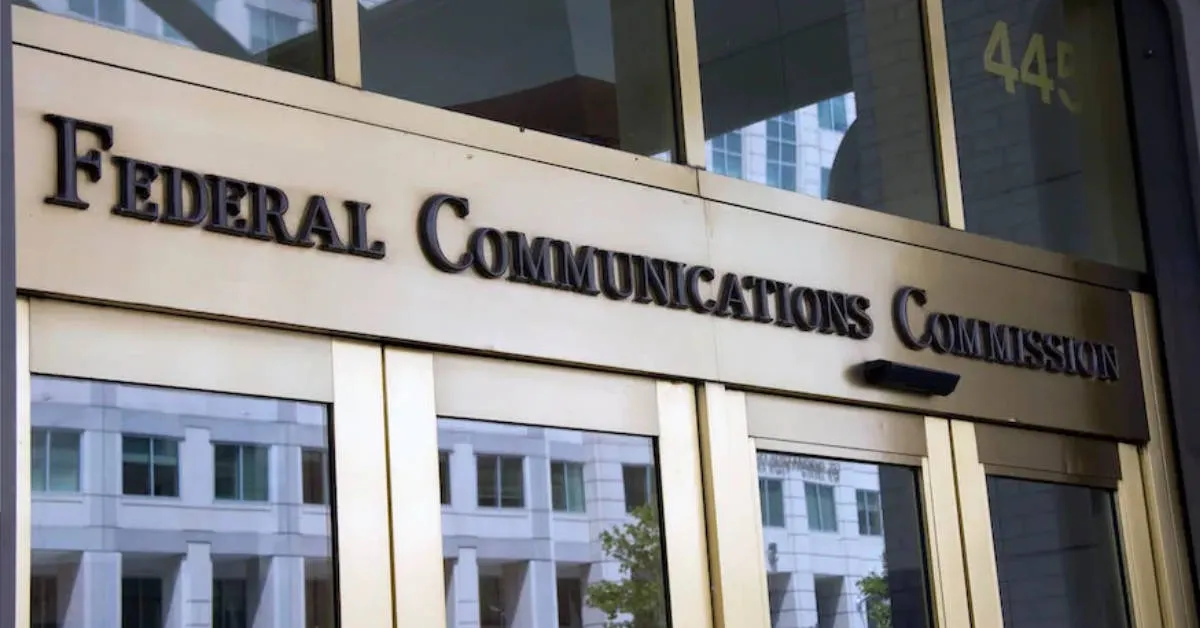
A group representing major pay television companies says the Federal Communications Commission (FCC) lacks the legal authority to lift a cap on the number of local TV stations a broadcaster may own at any given time.
The comments were made by the American Television Alliance (ATVA) in a filing to the FCC submitted just before the Thanksgiving holiday, a copy of which was obtained by The Desk on Monday, which argues the agency’s review of the national ownership cap is moot because it is not legally allowed to modify or eliminate the rule.
At the end of September, the FCC approved a Notice of Proposed Rulemaking (NPRM) that sought public comment on a number of broadcast-related matters, including whether its current ownership restrictions should be modified or deleted from its books.
Under current federal regulations, local TV broadcasters are not allowed to directly own stations that reach more than 39 percent of the American viewing audience. Some broadcasters — including Nexstar Media Group and Sinclair, Inc. — circumvent the rule by entering into agreements with shell companies that hold the FCC-issued licenses for some stations, though the stations themselves are operated by the bigger entity.
But those broadcasters say their operational control of local TV stations could be streamlined if they were allowed to own them outright. Larger companies are also prohibited from entering into direct mergers or acquisition agreements with each other based on the rule.
FCC Chairman Brendan Carr has signaled his support for reviewing the ownership rules, favoring arguments by broadcasters that consolidation in the local TV industry will allow them to better compete against streaming juggernauts like Netflix, Google’s YouTube and Amazon’s Prime Video, which are not licensed by the FCC and are thus unregulated by the agency.
On November 24, the ATVA said the FCC shouldn’t try to modify the ownership rules because Congress already settled the matter. In 2004, federal lawmakers passed the Consolidated Appropriations Act (CAA), which adopted the current 39 percent ownership cap. That same law also removed the FCC’s ability to review the 39 percent cap as part of its mandatory quadrennial review of other broadcast-related rules.
“When Congress directs agency action — whether through codification in a statute or through a direction to change a rule — the agency cannot undo that action unless Congress has authorized it to do so,” attorneys for the ATVA wrote in their letter to the FCC. The earlier Congressional action stemmed from a legal challenge sparked by Fox Corporation two years earlier, and lawmakers codified the end result of the case in the CAA.
The ATVA also cited a Supreme Court case from last year that said: “Congressional silence is no longer an invitation for regulatory discretion.” In other words, the Supreme Court determined that Congress needs to explicitly allow the FCC to review and modify the national cap before the agency can lift or eliminate it.
Last, the group noted that broadcasters were on the other side of the issue as recently as 2013, when they argued in FCC filings that the agency lacked the authority to change the cap when they were concerned the reach-based rule might be lowered, which would have required them to sell off stations if they exceeded it. The ATVA cited comments submitted by Sinclair, ION Media and 21st Century Fox to that point. (The E. W. Scripps Company, which acquired ION a few years ago, was not involved in those comments; 21st Century Fox is now Fox Corporation.)
The ATVA is largely opposed to lifting or eliminating the ownership rule because the group fears that broadcasters will consolidate, then concentrate their market power to raise distribution fees on cable and satellite providers. That trend is already occurring, with broadcasters admitting openly that they have raised fees charged to cable and satellite companies over the past few years, and will continue to do so.
Cable and satellite companies pass on those higher fees to their subscribers, which results in pay TV customers shelling out more money for the same set of channels. In recent years, some companies have opted to pull channels from their platforms instead of acquiescing to demands for higher fees, which has left subscribers without one or more channels for days or weeks at a time.
The ATVA is concerned that, if broadcasters are allowed to grow bigger, the likelihood of pay TV disputes will increase, and customers will lose even more channels at one time when those disputes occur. Channels will become more expensive to carry, and some companies have already signaled their willingness to drop local TV stations entirely.
ATVA members include Dish Network, DIRECTV, Frontier, Optimum, Charter Communications and ACA Connects, among others.
More Stories
- Nexstar asks local TV station executives to support media deregulation
- Broadcast TV stocks dip after Trump opines about ownership rules
- Through public notice, Carr signals tougher rules on broadcast networks coming
- Nexstar readies FCC applications to acquire TEGNA stations
- Sinclair CEO: Open season for broadcasters mergers, acquisitions