


Key Points

- Senate Commerce members debated whether the FCC should lift broadcast TV ownership caps, with broadcasters arguing the rules are outdated in a streaming-dominated market.
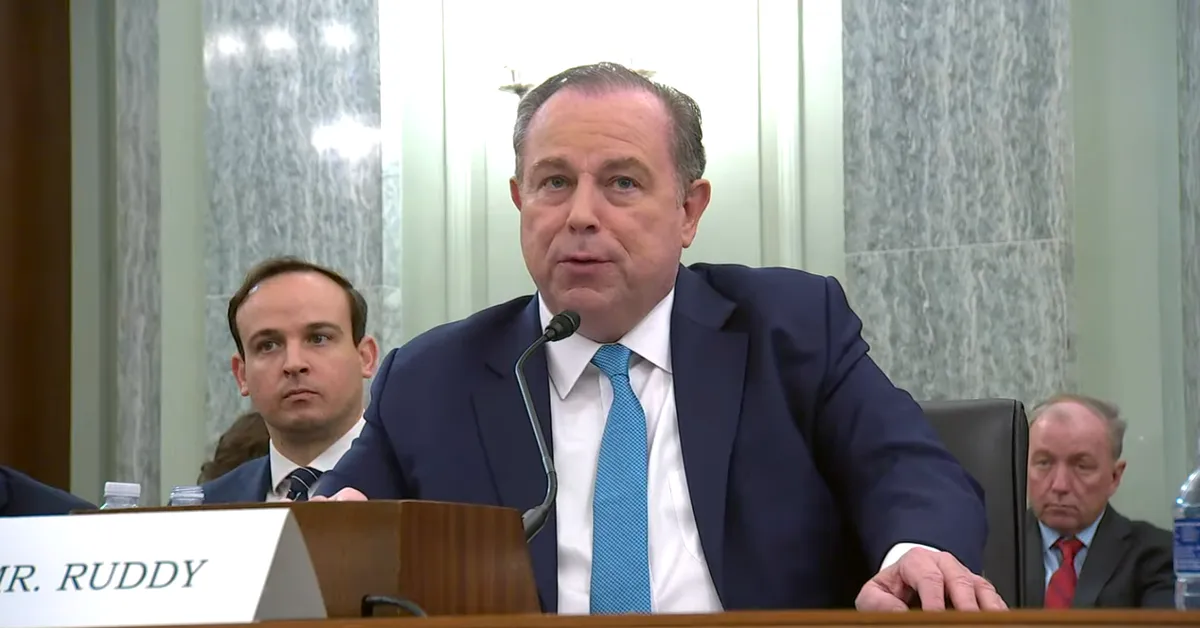
- Newsmax CEO Christopher Ruddy warned loosening caps would empower large station groups like Nexstar and squeeze smaller cable channels off pay TV platforms.
- Lawmakers showed mixed views, balancing concerns over consolidation against fears that failing to modernize rules will further weaken local TV news.
The Senate Commerce Committee heard expert testimony from the commercial broadcasting industry’s main lobbyist and the founder of a right-of-center cable news channel on whether the Federal Communications Commission should — and has the legal authority to — lift a long-standing rule that limits the number of TV stations a company can own at one time.
In his opening remarks at the nearly-three hour long hearing on Tuesday, Senator Ted Cruz of Texas questioned whether the FCC’s cap that restricts the direct ownership of broadcast TV stations by any one company was still relevant in an era where streaming platforms are competing for attention and advertising dollars, echoing concerns made by the National Association of Broadcasters (NAB) and many of its members.
“As several major mergers loom, the FCC is considering eliminating or lifting this cap,” Cruz said on Tuesday, noting that current media ownership rules were written “in a vastly different media age.”

Whether the FCC can actually eliminate the rule on its own is something of an unknown: Christopher Ruddy, the CEO of Newsmax, and several legal experts say the limitation was codified through an act of Congress, and the agency must enforce some kind of ownership restriction under the law.
Ruddy also made clear his motivation in opposing any move to eliminate the broadcast ownership rule: Newsmax competes on cable and pay TV platforms against other news channels, including Nexstar-owned NewsNation, which has grown in reach over the past few years.
Like other broadcasters, Nexstar charges fees for carriage of its local TV stations on pay TV platforms across the country. Since NewsNation launched in 2021, Nexstar has also demanded the cable operators bundle that channel with its local stations and pay for both accordingly.
Nexstar is already the largest independent operator of network-affiliated stations in the country, with the company using loopholes in existing law to grow its control of stations, including outlets that are owned by others on paper. Its demand for higher fees have led to disputes with DIRECTV, Verizon Fios and other operators that have resulted in Nexstar-owned local stations disappearing for weeks or months at a time.
Ultimately, those matters are settled, with some operators acquiescing to Nexstar’s demand for more money in order to offer premium events like National Football League (NFL) games carried on its ABC, NBC, CBS and Fox-affiliated stations. Those renewed agreement also typically require carriage of NewsNation, which bounces between fourth and fifth in the cable news ratings, behind Fox News, CNN and MS NOW.

Newsmax does not own any local TV stations, and Ruddy is concerned that Nexstar’s demand for higher distribution fees from cable operators with tight budgets could result in smaller channels, like his, being squeezed off platforms in the future.
That scenario will only get worse for independent channel programmers, like Newsmax, if the FCC is allowed to loosen its ownership rules, he argued on Tuesday.
“Large station groups wield enormous leverage over cable and pay-TV operators through retransmission consent fees, commonly known as retrans fees,” Ruddy said. “These station groups have the power to dictate what cable channels are carried on cable systems. We see this with Nexstar, which owns an enormous number of ABC, CBS and NBC stations — if cable operators want access to those local stations, they must pay Nexstar high retrans fees; if they refuse, Nexstar can, and does, pull its stations, leaving viewers in the dark.”
Ruddy said the situation means pay TV operators “pay license fees significantly higher” for NewsNation compared to what Newsmax charges, though he offered no specifics. The fees paid by cable, satellite and streaming platforms are typically shielded by non-disclosure agreements.
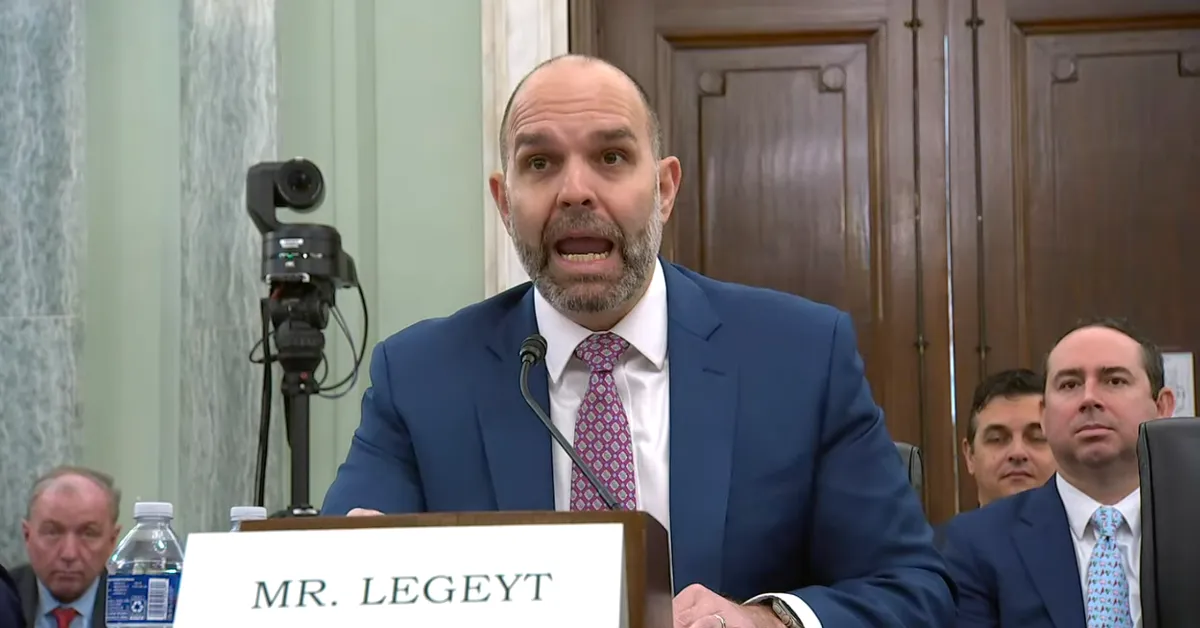
Curtis LeGeyt, the CEO of NAB, said the realities of the market today should convince anyone that broadcast consolidation is not only warranted, but necessary.
He reiterated a position long held by the NAB that major technology companies, like Google and Amazon, are allowed to spin up streaming services that compete for attention and advertising revenue without being restrained by similar rules — they’re allowed to scale their operations without any limitation.
The onerous ownership rules were meant to be a compromise that broadcasters agreed to when they accepted licenses to transmit on publicly-held air waves. But that was before streaming services changed the game — now, as broadcasters face dwindling advertising revenue and the likelihood that distribution fees will dry up soon, allowing them to scale is the only way to ensure their survivability, LeGeyt warned.
LeGeyt said broadcasters are one of the largest producers of local journalism in the country today, and the stations that commit themselves to community news are “facing growing financial pressure” because of major tech players.
“Fewer than half of TV stations now report that their local news operations are profitable,” LeGeyt complained. “Facing ever-rising news production costs and declining ad revenues, some broadcasters are simply unable to continue maintaining their own separate news operations.”
Smaller newsrooms that report to rural areas are most likely to be affected by the trend. Nexstar and some of its peers, including Sinclair and the E. W. Scripps Company, have already consolidated or shut down smaller TV newsrooms over the past few years in an effort to reallocate resources and save money.
It isn’t clear that market consolidation would have done anything to save those newsrooms, but the situation will only get worse if broadcasters are not able to combine and compete, LeGeyt warned.
“Without modernizing these ownership rules, local television news — the last bastion of truly local journalism in many communities — will suffer the same fate as thousands of local newspapers,” LeGeyt said.
That appeared to resonate with some progressive lawmakers, who are generally averse to corporate consolidation.
Senator Maria Cantwell of Washington was sympathetic to the plight of broadcasters who have been forced to reduce their local news resources over the past few years, and said it was clear that something needed to be done to support local news and community voices.
But she also expressed concern that allowing mass-media consolidation, like Nexstar’s proposed $6 billion acquisition of TEGNA, would lead to fewer journalists in the communities where broadcasters serve, not more. In the past, Nexstar has consolidated newsrooms in markets where it owns or operates two or more stations, including Denver.
“That is not more local voices; it’s fewer,” Cantwell said.
Cantwell also complained that some broadcast networks were making it more-difficult for Americans to enjoy “shared experiences” by placing key events like the Winter Olympic Games and Super Bowl LX behind streaming paywalls — a concern that independent broadcasters like Nexstar and others have also complained about.
While Super Bowl LX was available for free on broadcast stations, more regular-season NFL games have shifted from CBS, Fox and NBC to pay networks and streaming services like NFL Network, ESPN Plus, Netflix and Amazon’s Prime Video in recent seasons. The NFL is exploring the idea of renegotiating certain TV deals early with the goal of moving more regular-season games to streaming platforms, which have been willing to pay more for individual games compared to broadcast networks.
The Winter Olympic Games are streamed live and in their entirety on the premium service Peacock, while a few live events are offered on pop-up channels and cable networks owned by NBC Universal and Versant. NBC offers prime-time coverage of high-interest games on a tape-delay, on account of the time difference between Italy and the United States.
“As the media landscape has become fragmented every year those shared experiences are becoming rarer,” Cantwell said.