
Key Points

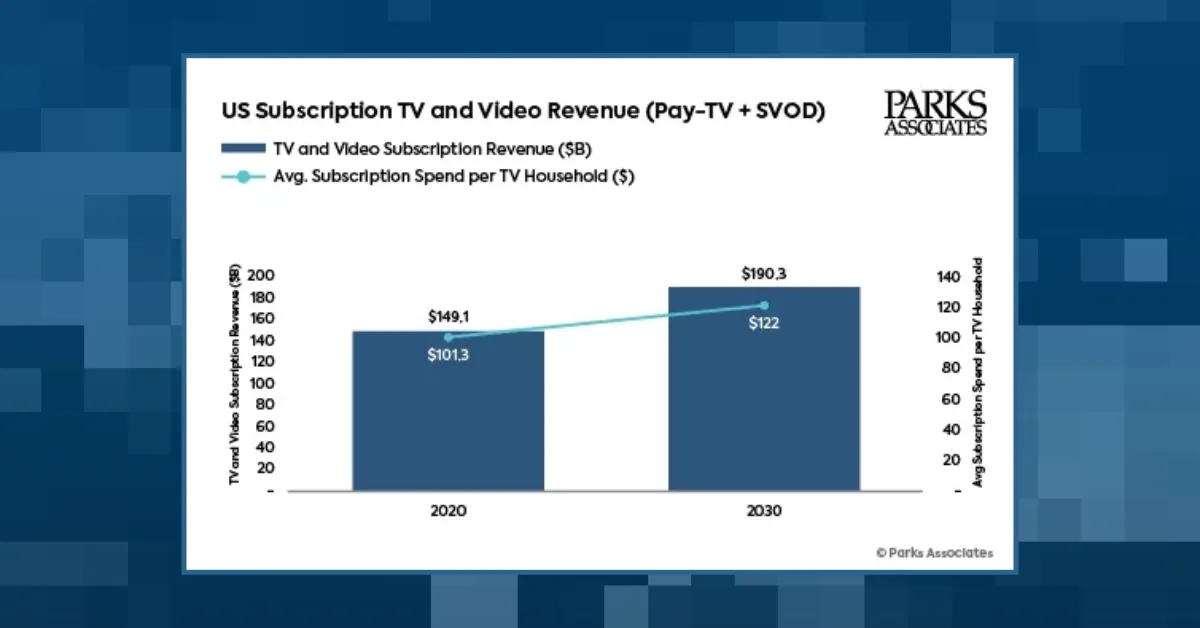
- Parks Associates forecasts U.S. subscription video revenue will rise more than 2 percent, surpassing $190 billion by 2030.
- Average monthly spending on subscription video is expected to peak at about $122.74 in 2028 before easing slightly.
- The firm said streamers are prioritizing value optimization as growth slows and consumers stack services and ad tiers.
Revenue from subscription video services in the United States is expected to rise more than 2 percent over the next five years, with total revenue likely to exceed $190 billion within that time frame, according to a new forecast released by Parks Associates this week.
The forecast was disclosed in the intelligence firm’s “Subscription Video Forecast” report covering this year through 2030. By the end of the decade, the average American is expected to pay around $122 per month for various subscription products, including traditional pay TV or a streaming equivalent like YouTube TV or Fubo and premium, on-demand video apps like Netflix, Prime Video and Disney Plus.
Parks Associates said the amount Americans will pay for subscription video products will peak in 2028, with the average monthly cost at $122.74, largely attributed to rising video prices. That spend will ease slightly at $122.08 by the end of the decade, Parks forecasted in its report. The company didn’t disclose the reason for the slight price drop over that two-year period in a press release that previewed the report.

The intelligence firm said its forecast is based on a presumption that “consumers are willing to pay more for premium content, bundled services and multiple subscriptions.”
Given the current state of the economy, it’s unclear how that will shake out; further complicating projections is the political nature of certain business deals, with the current administration signaling a willingness to allow mass media consolidation, so long as companies offer concessions that are in line with social policy objectives.
Parks Associates didn’t get into the weeds of how political matters might shape the subscription video business over the long term, but the firm’s Research Director Michael Goodman said subscription video services were shifting their focus from growing customers to optimizing value as the domestic market entered its period of maturation.
“Consumers are stacking more services, gravitating toward ad-supported tiers, and demanding more flexibility,” Goodman said in a prepared statement. “Our model shows a stable but fundamentally transformed market where streaming is the economic engine and pay TV becomes a smaller, more specialized segment.”
Parks Associates said its Subscription Video Forecast combined its proprietary research with a multi-layer quantitative modeling framework, which allows it to deliver unique insights on total subscription trends among U.S. consumers; adoption of subscription video services and consumer staking trends; ad-supported tier growth among subscription services that offer one; pay TV subscriber and revenue declines by service provider and other elements.
More information about the Subscription Video Forecast is available by clicking or tapping here.