



Key Points

- Consumers are shifting from direct streaming subscriptions to bundled services offered by telecom and other providers.
- Rising costs are pushing consumers toward ad-supported tiers, with over one-third willing to accept more ads for lower prices.
- Content loyalty is weakening as 59 percent of Americans prioritize specific shows over platforms, and 37 percent can’t recall which service hosted programs they watched.
Consumers are moving away from direct relationships with streaming apps and other digital services in favor of bundles offered by telecommunications firms and other ordinary service providers.
The report, called “Subscription Signals 2026,” is based on a survey of more than 4,000 consumers in the United States and the United Kingdom, and outlines what Bango calls a “great disconnect” between subscription providers and customers.
While overall demand for subscriptions remains strong, the nature of consumer engagement is changing. U.S. consumers now maintain an average of 5.2 subscriptions, spending nearly $70 per month for their entertainment and digital service needs, Bango reports.
Nearly a quarter of Americans say they are spending more than they can afford, rising to 41 percent among Gen Z consumers, the report says.
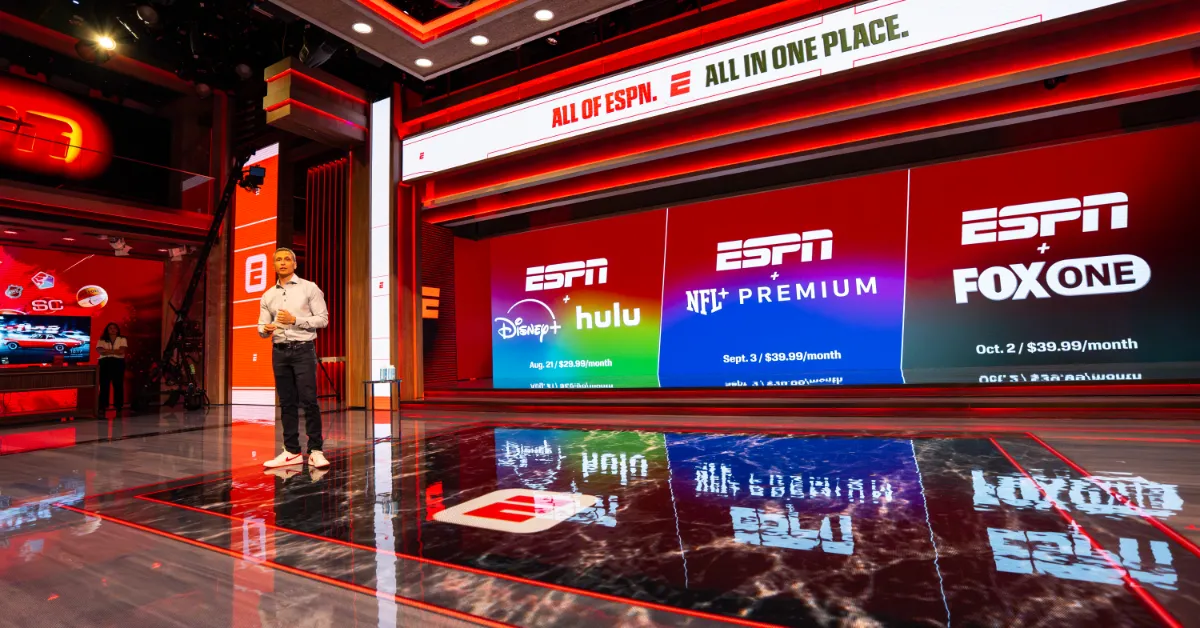
Cost pressures, including price increases effectuated by some of the larger subscription streaming services, are driving a desire for more-bundled opportunities, which typically allow customers to purchase access to two or more services at a discounted price.
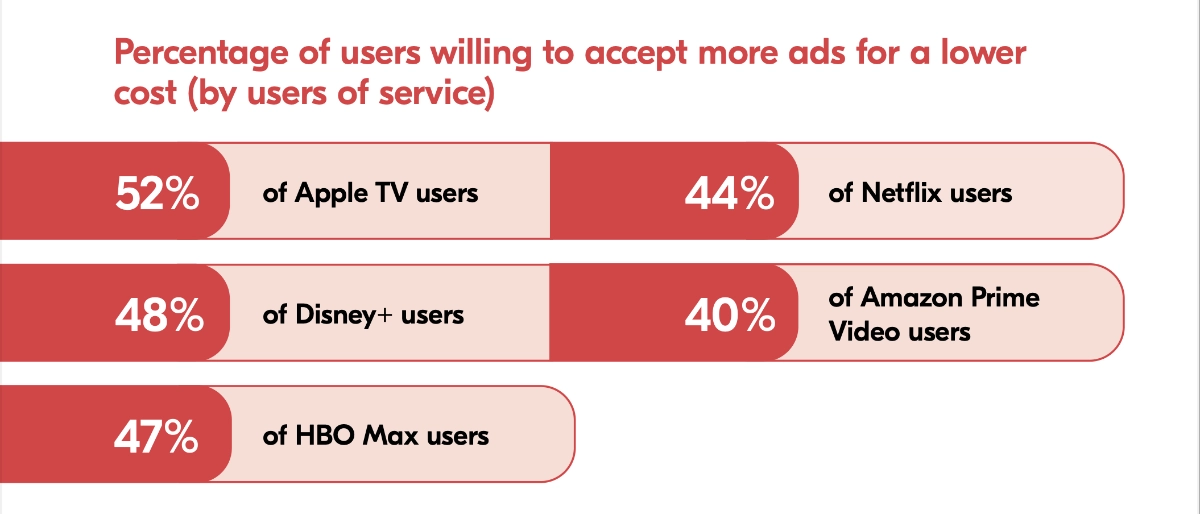
Some of those bundles offer even more discounts if customers are willing to stream premium content with ads, and tolerance for commercial breaks has grown as customers reach a breaking point when it comes to the price of commercial-free tiers, some of which are now over $20 per month. More than one-third of consumers surveyed by Bango said they’d be willing to tolerate more ad breaks in streaming content if it meant they could have lower overall prices.
Telecommunications providers are helping to drive the adoption of bundles: In the U.S., the average household subscribes to nearly two subscriptions through perks offered by their phone or Internet company, or a marketplace like Amazon’s Prime Video Channels, The Roku Channel and YouTube Primetime Channels.
“For years, the assumption was that subscribers would always pay more to avoid [advertising] — but, for a growing number of consumers, watching more ads is now an acceptable trade-off if it means keeping monthly costs down, especially among younger viewers,” Giles Tongue, the Vice President of Marketing at Bango, said in a statement.
Tongue continued: “The data suggests that mindsets are changing, not just plan preferences. As budgets tighten, people are not only rethinking what they pay for, but how they access subscriptions in the first place. That could mean accepting ads, looking for discounts, or turning to bundles that make subscriptions easier to manage and better value.”
Subscribers of Apple TV said they’re more likely to accept advertising in exchange for lower price points (52 percent), followed by Disney Plus subscribers (48 percent) and then HBO Max users (44 percent).
Content loyalty is also evolving: Fifty-nine percent of Americans say they are loyal to specific shows rather than the platforms that distribute them, and 37 percent cannot recall which service hosted a program they recently watched, Bango said. That dynamic has weakened brand affinity and complicated customer retention strategies across streaming services.
Consumers are also grappling with content overload: Nearly one-third report spending more time searching for something to watch than actually viewing content, while 25 percent say they frequently abandon shows after just a few episodes. Despite the abundance of programming, a similar share of users feel they have “run out” of options, which emphasizes the challenge of search and discovery in a marketplace that is becoming increasingly fragmented.
Artificial intelligence is emerging as a potential solution to that problem. The report found that 22 percent of Americans would consider allowing AI to select content on their behalf, and 20 percent would allow AI to manage subscriptions entirely, including signing up and canceling services. Adoption is significantly higher among younger consumers, an indication that AI-driven aggregation and management could become more prevalent over time, Bango noted.
These shifts are contributing to declining interest in standalone subscription services. About 31 percent of Americans say they are “done” with individual subscriptions, preferring instead to access content through bundled offerings. Nearly half of respondents expect subscriptions to be included as part of broader packages tied to internet, mobile or television services.

For telecom companies and other resellers, this presents a strategic opportunity. The report indicates that 62 percent of consumers would be more loyal to providers that help them save on subscriptions, and 51 percent would consider switching providers for bundled discounts.
For content providers, however, the findings signal a need to rethink distribution strategies. As consumers increasingly discover and access content through indirect channels, expanding partnerships and participating in bundled ecosystems may be essential to maintaining reach and relevance.
“For consumers, this is about keeping the services they want in ways that feel more affordable and flexible,” Tongue said. “or streaming platforms and subscription providers, it means affordability and flexibility are becoming just as important as content itself. As people look for better value through bundles and partnerships, brands that make access worthwhile will be much harder to walk away from.”
To read the full report from Bango, click or tap here.