

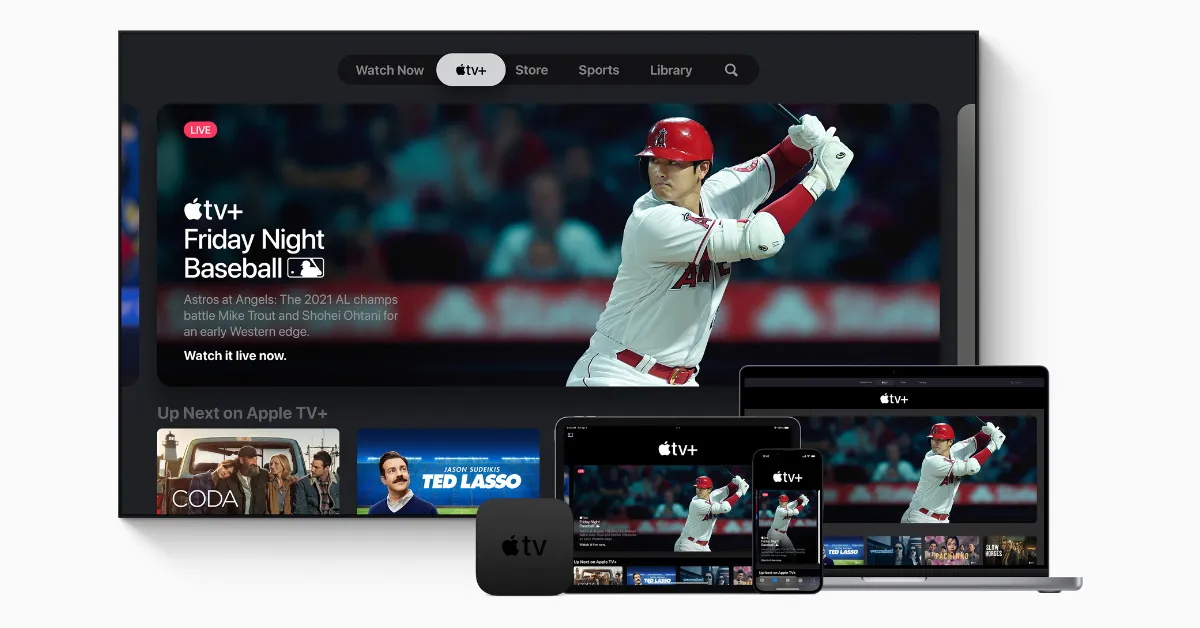
Apple is working on a version of its Apple TV Plus streaming service that will include advertisements, according to a report published this week.
On Wednesday, ad industry publication Digiday said Apple has been pitching media agencies on an ad-supported version of the streaming TV service it launched just a few years ago.
It wasn’t clear from Digiday’s report if the ad-supported version of Apple TV Plus would be cheaper than the current version Apple distributes mostly through its own hardware. Apple TV Plus currently costs $5 a month or $50 a year, though customers who buy new Apple products like iPhones, iPads and Mac computers typically get a few free months to try out the service.
Apple’s on-demand movies and TV shows are mostly licensed from third parties, with the company developing very little of its own content. Those shows and movies are typically available without advertisements, though live streams of certain events, including Major League Baseball, do carry commercial breaks.
Apple recently announced a deal to bring more sports to the platform, including live Major League Soccer games. Executives who spoke with Digiday said some of the conversations centered around those events, and not an ad-supported version of Apple TV Plus.
The California-based electronics company has a robust advertising business for its phone and tablet app store. It also has a partnership with Comcast’s NBC Universal for advertisements that appear within the Apple News app, which collates articles published by newspapers, magazines and blogs.
Apple’s current ad business is rumored to generate around $4 billion in revenue each year, according to some estimates. That number is expected to increase as time goes on, and the inclusion of ads in video content seems like a natural trajectory for the company to go.
It could also help convince content partners to include more live sports and other events within the Apple TV Plus app. Apple is rumored to be a leading contender to take the NFL Sunday Ticket sports package away from DirecTV next year (Google and Amazon are also competing for the package, according to reports) and a robust advertising platform baked into its video offering could generate additional revenue opportunities for the tech company and the sports leagues it partners with.
Apple’s possible exploration of an ad-supported tier comes as other companies have taken the same approach with the respect to their streaming TV products. Paramount Global, Warner Bros Discovery and the Walt Disney Company have used a hybrid subscription model in which customers can pay more to remove commercial interruptions from content, or pay less if they’re willing to tolerate advertisements. Paramount Plus, Hulu, HBO Max and Discovery Plus all have ad-supported and commercial-free tiers; Disney Plus and Netflix are rolling out ad-supported tiers in the coming months.
