
The Desk appreciates the support of readers who purchase products or services through links on our website. Learn more...

YouTube TV loses Univision, makes short-term deal with NBC

Univision, TUDN and Galavision were pulled from the service Tuesday night; NBC channels remain under a short extension.

Photo of author
By:
»

mkeys@thedesk.net

Share:
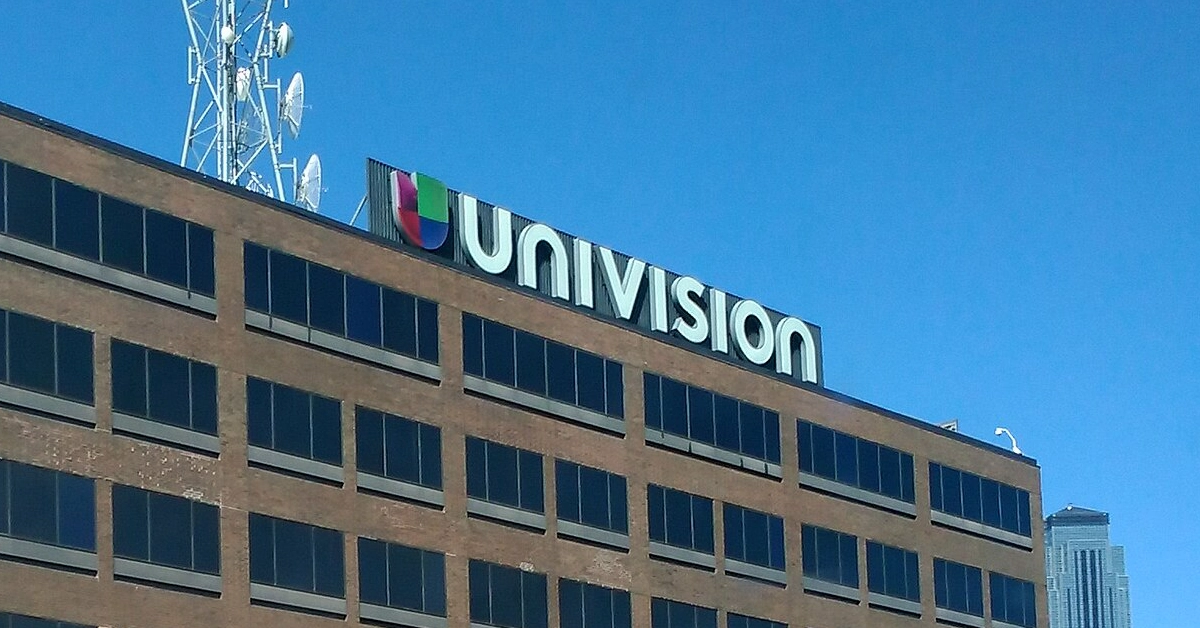
The television studio and administrative offices of KXLN, the Univision-owned station in Houston, Texas.
The television studio and administrative offices of KXLN, the Univision-owned station in Houston, Texas. (Photo via Wikimedia Commons, image edited by The Desk)

Update: On Thursday, Google and Comcast’s NBC Universal signed a new agreement that keeps NBC Universal channels on YouTube TV. Click or tap here to read the latest…


Google-owned streaming cable television alternative YouTube TV has dropped several channels owned by Televisa-Univision after a carriage agreement lapsed with no new deal in place.

The disruption affects channels like Univision, Galavision and sports channel TUDN (Televisa-Univision Deportes Network), including local broadcast feeds and national networks that were carried in YouTube TV’s base programming package and the Spanish Plus add-on.

Separately, YouTube TV continues to negotiate with Comcast’s NBC Universal toward a new deal that will keep Spanish-language broadcaster Telemundo and several English channels like NBC, SyFy, MSNBC and USA Network on its platform for a while longer.

Late Tuesday evening, a spokesperson for NBC Universal said the company reached a temporary deal that keeps its channels on YouTube TV beyond the September 30 deadline while both companies continue to negotiate a new agreement. The extent of the limited agreement — including when it will lapse — was not revealed.

Both broadcasters warned YouTube TV was likely to drop their channels at the end of September, when separate but similar distribution agreements were due to lapse. Televisa-Univision was particularly noisy about the issue, accusing YouTube TV of wanting to relegate its networks to a separate tier that would cost subscribers more money to access its Spanish-language channels.

In late September, Televisa-Univision launched a national ad campaign called “Do the right thing, Google” that intended to provoke the tech giant into forming a new deal that kept its channels on the platform beyond the end of the month.

Ultimately, that didn’t happen. By mid-Tuesday, Google had pulled Televisa-Univision channels from YouTube TV, with little explanation.

The decision came after Hispanic advocacy groups criticized Google’s lack of negotiation with Televisa-Univision and NBC Universal, accusing the tech giant of discriminating against Spanish-language audiences.

“For decades, Univision and Telemundo have been more than television networks — they are lifelines right now,” Luz Magaña, the Director of Operations for the U.S. Hispanic Leadership Institute, said during the press event. “They provide news during emergencies, during elections and cultural programming, programming that reflects who we are as a community.”

Amy Hinojosa, the Chair of the National Hispanic Leadership Agenda, said the situation was similar to one involving Great American Family, a faith-based network that landed on YouTube TV shortly after Federal Communications Commission (FCC) Chairman Brendan Carr demanded answers from Google about its lack of carriage on the platform.

“We’re talking about fairness across the board…this is happening over and over again,” Hinojosa said. “We should really start to look into this and make sure that, if they’re not dealing in good faith, then the regulatory agencies that are tasked with this are taking their jobs seriously and working on it.”

For Televisa-Univision, the loss of distribution on YouTube TV keeps its channels from reaching around 10 million subscribers who prefer that platform over cable and satellite. It marks the second time in less than a year that the broadcaster has lost distribution on a major streaming service: In January, Fubo announced it would no longer carry Televisa-Univision’s channels in its base or Spanish-language programming packages. The decision caused both companies to lose revenue, according to financial disclosure reports released several weeks later.

Televisa-Univision distributes most of its television programming through its own streaming service, called Vix, which offers ad-supported and commercial-free tiers at varying price points. A streaming package offered by DirecTV, called MiEspañol, also includes Univision, Telemundo, TUDN and dozens of other Spanish-language channels along with access to the premium version of Vix for $35 per month — nearly $50 less than YouTube TV’s base programming package.

Univision and Telemundo are also available in Hulu with Live TV, which starts at $83 per month and includes Disney Plus, the on-demand Hulu library and ESPN Unlimited. New customers can get Hulu with Live TV for $65 per month for three months when they sign up by clicking or tapping this link.

Read more:

Never miss a story

Get free breaking news alerts and twice-weekly digests delivered to your inbox.

We do not share your e-mail address with third parties; you can unsubscribe at any time.

Photo of author

About the Author:

Matthew Keys

Matthew Keys is the award-winning founder and editor of TheDesk.net, an authoritative voice on broadcast and streaming TV, media and tech. With over ten years of experience, he's a recognized expert in broadcast, streaming, and digital media, with work featured in publications such as StreamTV Insider and Digital Content Next, and past roles at Thomson Reuters and Disney-ABC Television Group.
TheDesk.net is free to read — please help keep it that way.

We rely on advertising revenue to support our original journalism and analysis.
Please disable your ad-blocking technology to continue enjoying our content.Learn how to disable your ad blocker on:
Chrome | Firefox | Safari | Microsoft Edge | Opera | AdBlock plugin

Alternatively, add us as a preferred source on Google to unlock access to this website.

If you think this is an error, please contact us.