


Key Points

- FCC Commissioner Anna Gomez said Nexstar’s proposed $6 billion acquisition of TEGNA should be reviewed and voted on by the full Commission, not just the Media Bureau.
- Gomez argued the deal conflicts with the 39 percent national ownership cap, noting Nexstar already reaches over 80 percent of U.S. households through exemptions and shared services.
- The FCC could grant waivers to approve the transaction, though Gomez said it remains unclear when the agency will act.
The lone Democratic official at the Federal Communications Commission (FCC) says Nexstar Media Group’s proposed $6 billion acquisition of peer broadcaster TEGNA should be scrutinized and voted on by the full panel of commissioner.
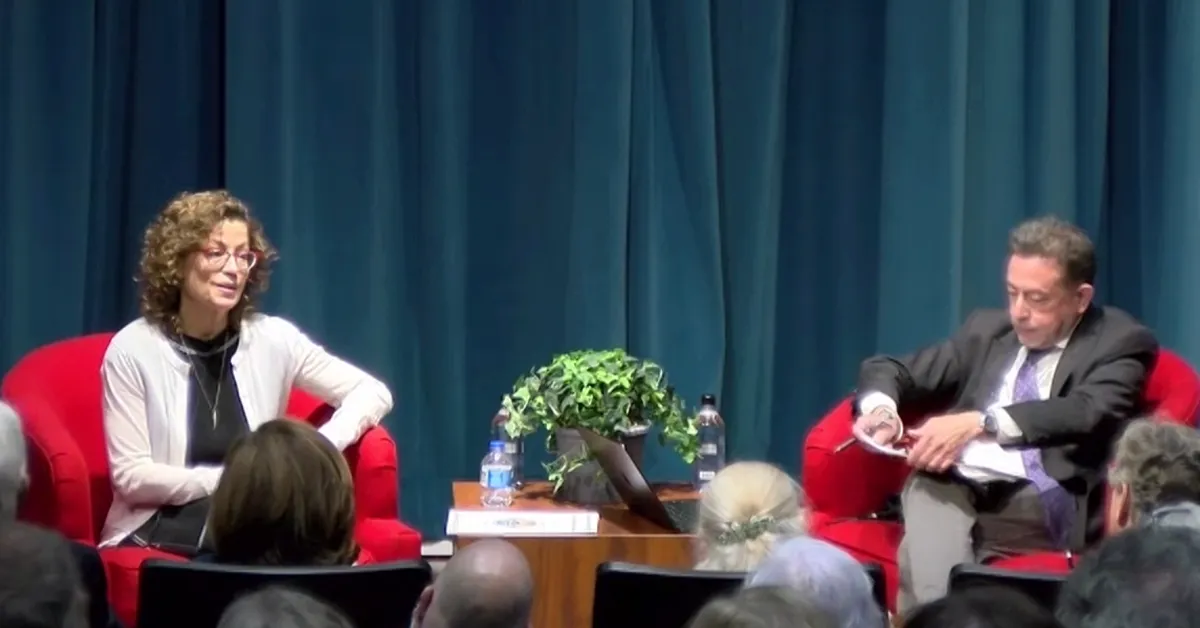
At a press conference on Wednesday, FCC Commissioner Anna Gomez said Nexstar’s proposal oversteps the agency’s cap on broadcast TV station ownership, which limits the number of TV licenses one company may hold at any given time.
Under current rules enforced by the FCC, a broadcaster like Nexstar cannot have direct ownership of licensed TV stations that reach more than 39 percent of the American viewing audience. Nexstar reaches more than 80 percent of the population through its control of TV stations owned by other companies and by tapping into a little-known exemption called the “UHF discount,” which allows it to undercount some stations that transmit on specific frequencies.
Nexstar’s transaction requires FCC approval because the agency would be required to transfer or reassign broadcast licenses from TEGNA. Under normal circumstances, an application to transfer broadcast licenses is scrutinized and approved or rejected by the FCC’s Media Bureau, which allows for an expedited process after customary reviews.
But Gomez said the Media Bureau should not be alone in approving or denying Nexstar’s application. With concerns that the Media Bureau will largely follow the wishes of Trump-appointed FCC Chairman Brendan Carr, Gomez wants the full board to vote on the matter, she said Wednesday.
“This should be voted at the Commission level; it absolutely should not be done at the Bureau level,” Gomez said. “It’s a new and novel issue, and it’s also a very difficult issue, because actually approving the transaction would be prohibited by the statutory cap on ownership.”
Some broadcasters, including Nexstar, have urged the FCC to eliminate its ownership cap entirely, asserting they can maintain — and even increase — investments in local news and community-oriented programming if they can consolidate their operations to better compete against larger streaming services.
Those broadcasters contend that services and apps like YouTube and Prime Video are backed by deep-pocketed tech companies who have spent billions pursuing lucrative sports rights and chasing after TV advertising budgets while making no investments in local news.
Streaming platforms are not regulated by the FCC, including streaming apps and channels operated by broadcasters that simulcast local news and community-oriented programming.
The FCC can still approve Nexstar’s proposed acquisition of TEGNA by granting waivers to its existing ownership rules in each market where TEGNA owns a local TV station. Both companies own or operate TV stations in large markets like Denver, Sacramento, San Diego and Washington, D.C., which further complicates the issue.
Gomez said she isn’t sure when the FCC might act on Nexstar’s request to eliminate the ownership cap or grant waivers in the markets where Nexstar and TEGNA operate stations, telling reporters that “I’ve heard what you heard” when asked about the matter on Wednesday.
While Carr has expressed a willingness to ease certain rules on broadcasters, there is a rare political mismatch when it comes to the issue of ownership rules.
The National Association of Broadcasters (NAB), the commercial broadcasting industry’s main lobbying arm, supports the elimination of the broadcast TV ownership cap, arguing the FCC has the ability to raise or abolish the ownership cap whenever it wants.
But Christopher Ruddy, the CEO of right-of-center cable news outlet Newsmax, says the FCC can’t simply eliminate the long-standing rule because Congress codified an ownership cap by law. The law doesn’t specify what the ownership cap is, but does require the FCC to review its ownership rules once every four years.
Most Americans appear to reject the premises made by the NAB, according to at least one survey conducted last year. Four out of five prospective midterm election voters said they oppose reforming media ownership rules if doing so allowed local broadcasters to grow larger, and most survey participants said they were concerned that consolidation across broadcast companies would lead to higher cable and satellite fees.
More Stories
- Trump backs Nexstar-TEGNA deal, despite DEI philosophy
- Newsmax CEO Chris Ruddy threatens lawsuit over FCC TV ownership cap
- Senator Cruz plans hearing on FCC broadcast ownership rules
- Sinclair urges FCC to approve Nexstar acquisition of TEGNA
- Nexstar CEO says Trump, Congress favor broadcast deregulation
- FCC Chairman Carr defends trolling broadcasters in Senate hearing