



Key Points

- A Parks Associates study found 30 percent of U.S. streamers cancel to cut household costs and 20 percent churn after price increases, outpacing content-related reasons.
- Nearly one-quarter cancel after finishing a series, while about one in five leave because they cannot find something to watch.
- Despite churn, over 90 percent of households keep at least one subscription, averaging 5.8 services, with lower-priced ad tiers showing resilience.
- The findings will be discussed during a free webinar on Thursday.
American consumers say cost is becoming a bigger consideration when it comes to whether to maintain a streaming subscription or churn out of a service, according to a new report released by Parks Associates this week.
The report, rooted in its “S.O.S. State of Streaming” study conducted last year, found cost considerations amid tightening household budgets ranked higher than promotional pricing and the availability of content offered by a streaming service in the minds of consumers.
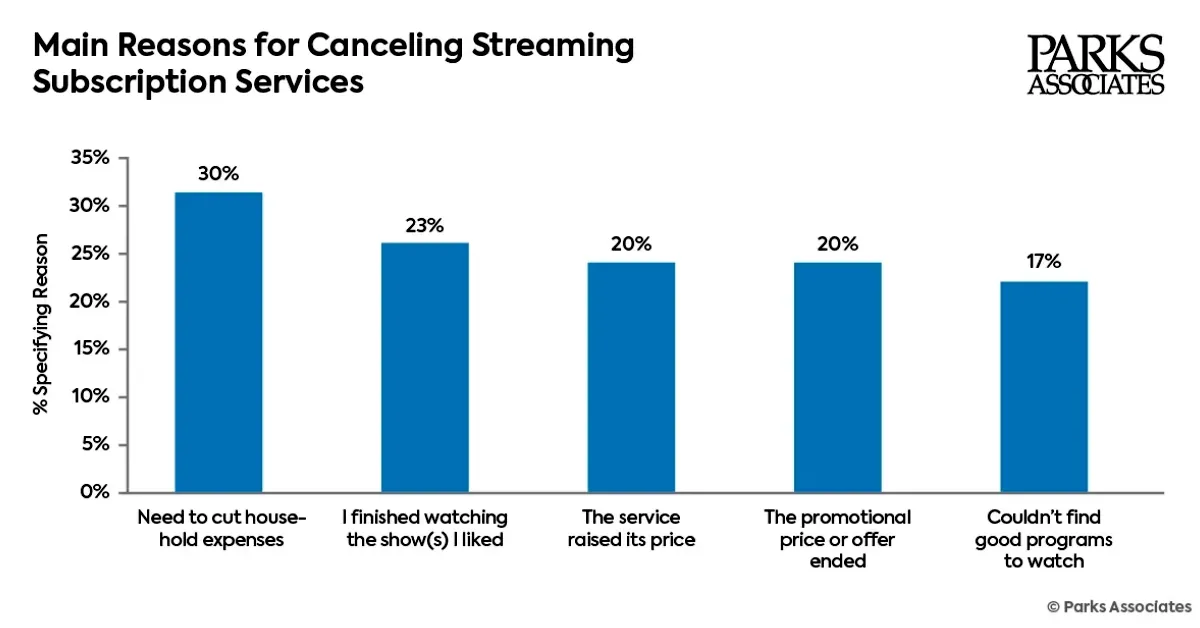
According to Parks Associates, 30 percent of respondents said a desire to cut household expenses was the primary reason for dropping a premium streaming service, while 20 percent said a price increase motivated them to churn out.

Nearly one-quarter of survey participants said they churned out after they finished watching a series, while around one in five streamers said they ditched a service because they couldn’t find something to watch.
The report was based on responses from 8,000 U.S.-based Internet households conducted during the third quarter (Q3) of last year. A portion of the report was revealed during the Future of Video conference produced by Parks Associates last November.
“Consumers are no longer choosing between services, they’re choosing between price points,” Michael Goodman, the Director of Entertainment Research at Parks Associates, said in a statement. “Platforms that treat affordability as a retention strategy, not a discount tactic, are far better positioned to manage churn in this mature market.”
While cost might be encouraging churn, it isn’t chipping away at streaming’s lead in the living room. More than 90 percent of survey participants said they have at least one premium streaming subscription, and the average American household pays for 5.8 subscriptions, up from 5.5 reported in 2021.
But Americans are getting more choosy with the subscription they pay for, and apps that have lower-priced, ad-supported plans are proving resilient with consumers.

The experience on ad-supported plans is something of a mixed bag, with more than two-thirds of streamers surveyed by Parks Associates saying the same ads are repeated too often, leading to a frustrating experience on those platforms.
Goodman will discuss the findings of the S.O.S. State of Streaming report during a free webinar on Thursday, February 12. The Desk was a release partner for the original report last year, with featured research supported by Philo, InterDigital, Skreens, Adeia, Sling TV and Broadpeak.