
Key Points

- California warned Nexstar ahead of closing its TEGNA deal and asked it to delay the transaction pending investigation, according to court documents.
- Nexstar proceeded after federal approvals, prompting lawsuits from states and DIRECTV over antitrust concerns.
- A court order currently requires the companies to operate separately as the case moves forward.
Attorneys with the State of California warned executives at Nexstar Media Group that their office was scrutinizing the broadcaster’s proposed $6.2 billion acquisition of TEGNA more than a week before the deal closed, according to court documents reviewed by The Desk.
The notice was issued by the California Department of Justice on March 10, nine days before the Federal Communications Commission (FCC) and the U.S. Department of Justice (DOJ) approved the transaction, which allowed Nexstar to instantaneously close on the deal that same day.
State prosecutors asked Nexstar to sign an agreement that the deal would not be consummated until after their investigation of the merger was complete, something that Nexstar ultimately ignored, according to a declaration by California Deputy Attorney General Connie Sung.
The declaration was part of an ongoing lawsuit filed by the attorneys general of California and several other states and by DIRECTV against Nexstar, which accuses the company of violating federal antitrust lawsuits by acquiring TEGNA.
Rather than agree to put the deal on pause while the state’s probe played out, Nexstar moved forward with its acquisition of TEGNA after receiving appropriate regulatory approvals from federal agencies. The lawsuits from the states attorney general and DIRECTV, which have since been consolidated into a single action, were filed less than 24 hours before the closure was announced.
At a court hearing on Tuesday, Nexstar argued that it has already invested substantial amounts of money in closing on its transaction with TEGNA, and that the company faces irreparable financial harms if the states and DIRECTV are successful in unwinding the merger while the case proceeds.
A federal judge overseeing the lawsuit approved a temporary restraining order late last month that effectively requires Nexstar and TEGNA to operate as separate entities, with unique executive leadership and without sharing confidential business information. The hearing on Tuesday sought arguments from all sides on whether an injunction should be issued, which would prolong the restraining order through the duration of the lawsuit, possibly with modified restrictions on Nexstar.
Nexstar is already the largest independent owner-operator of local broadcast television stations in the country, with more than 200 TV stations under its control. The acquisition of TEGNA involves another 60 stations in 40 markets, including nearly three dozen where Nexstar already owns a TV station.
Under current federal law, one broadcaster may not have direct ownership of licensed TV stations that reach more than 39 percent of the American viewing audience. But the FCC has the ability to waive its ownership rules in exigent circumstances, based on a variety of elements, including whether a transaction would further the “public interest,” a term that isn’t legally defined.
In this instance, the FCC took the unprecedented step of approving waivers in all markets where TEGNA owns a local TV station. In its order, the FCC’s Media Bureau said Nexstar successfully argued that its current and future investments in local news programming, coupled with tougher competition from streaming services, satisfied the necessary elements for those waivers.
DIRECTV and the states suing Nexstar argue that approving the merger allows one broadcaster to have too much control over a regulated market. DIRECTV is concerned that Nexstar will continue to raise the fees it charges cable and satellite operators for the privilege of distributing local and national channels to their subscribers, the prime cause of rising cable and satellite bills over the past decade. Absent an agreement to pay those fees, DIRECTV and other pay TV providers have been forced to pull Nexstar-owned channels for weeks or months at a time.
The concern is exacerbated by the fact that Nexstar owns more local TV stations affiliated with the “Big Four” networks — ABC, CBS, Fox and NBC — than any other company. Most of the stations operated by TEGNA are also affiliated with one of the Big Four networks.
Under the law, DIRECTV is not allowed to provide a network-affiliated station from another city when a Nexstar or TEGNA-owned station is blacked out on their service. The broadcast networks are also unwilling to provide DIRECTV with a national feed of their programming, DIRECTV attorney Glenn Pomerantz argued on Tuesday. One exception exists for DIRECTV’s genre-based streaming packages, which few subscribers have, Pomerantz said; The Desk previously reported that DIRECTV offers a national programming feed from NBC in its genre packages when a subscriber is in a city where Nexstar owns the local NBC affiliate.
An attorney for Nexstar said programming-related disputes aren’t in the company’s interest, either, because they lose revenue when a company isn’t paying to distribute their channels.
“It’s policy not to engage in blackouts, because Nexstar loses subscription revenue, we lose advertising revenue, it encourages cord-cutting — all of which are harmful to Nexstar,” the attorney, Alexander Okuliar, said on Tuesday.
Okuliar said DIRECTV couldn’t prove that programming-related fees will increase simply because Nexstar acquires more TEGNA stations, something that attorneys for DIRECTV and the states argued defied common logic.
California Deputy Attorney General Laura Antonini said their portion of the lawsuit was a proactive attempt to prevent consumers in the state from paying more in their cable and satellite bills based on the likelihood that Nexstar will raise fees on its own stations and TEGNA-owned stations in the near future.
“There are millions of cable and satellite subscribers here who are going to be affected by this merger, who are going to be subjected to the degradation of local news, who are going to have to pay higher prices,” Antonini said. “That’s enough to show general harm, to show harm to our economy.”
It isn’t clear if Nexstar or TEGNA informed their respective shareholders of California’s probe in the matter before the deal was consummated in late March. One month earlier, both broadcasters told investors they expected the acquisition to close during the second half of the year.
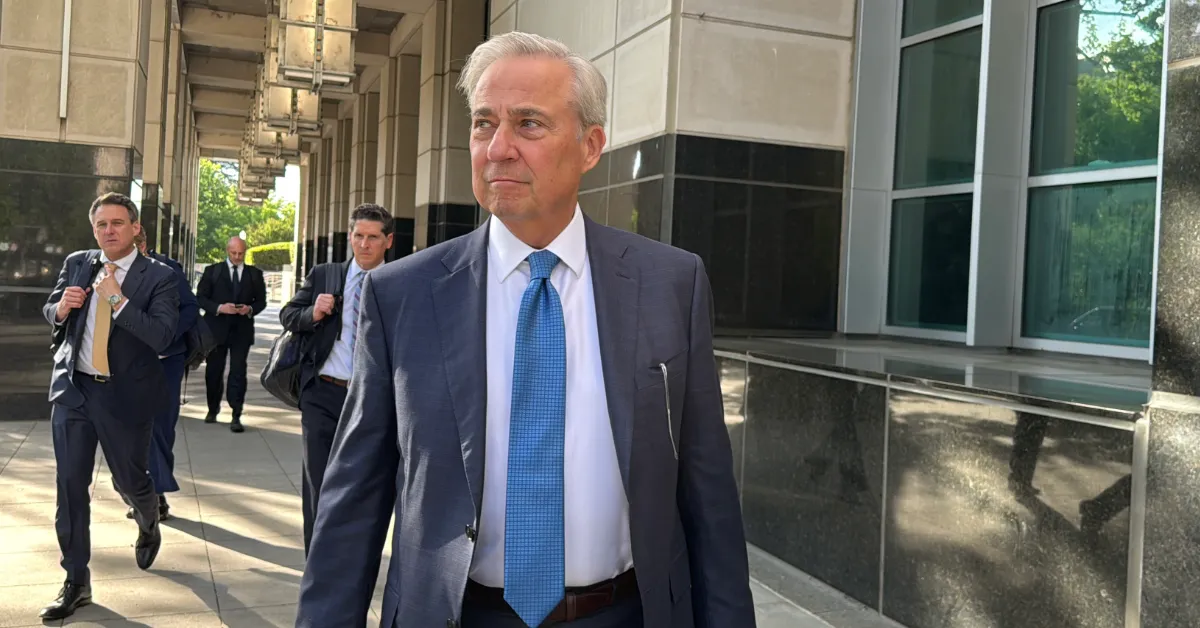
Approached outside of court on Tuesday, Nexstar CEO Perry Sook declined to say whether he was concerned about a possible shareholder lawsuit if the federal court approves a request for an injunction or the overall case doesn’t go in favor of the company.
The judge overseeing the case is expected to issue his order on the injunction in the next few days.
—
Editor’s note: An earlier version of this story misidentified an attorney representing DIRECTV in the lawsuit as “Greg Pomerantz.” His name is Glenn Pomerantz.
More Stories
- Federal judge delays order on injunction in Nexstar-TEGNA merger lawsuit
- Judge grants restraining order blocking Nexstar-TEGNA deal from taking effect
- States seek court restraining order to block Nexstar-TEGNA merger
- Lawsuits against Nexstar will continue after company closes TEGNA deal
- FCC says it granted ownership rule waivers to approve Nexstar-TEGNA deal
- Opponents of Nexstar-TEGNA merger accuse CEO of “doublespeak”
- Report: Nexstar wants $2.75 billion bank loan for TEGNA acquisition
- Nexstar CEO: TEGNA deal expected to close in late 2026, station sales possible
- States may sue to block Nexstar-TEGNA deal
- Sinclair urges FCC to approve Nexstar acquisition of TEGNA
- FCC’s Gomez says Nexstar-TEGNA deal should get full panel vote
- CWA to make five proposals to Nexstar shareholders
- TEGNA pays $6,000 to settle FCC probe over public inspection files
- Optimum says FCC should review rule banning substitute broadcast signals during blackouts
- TEGNA ad revenue climbs 4 percent during Q4; distribution income dips
- Nexstar posts $83 million profit in 2025, despite lower overall revenue
- Nexstar lays off workers at KTLA, WPIX amid push for TEGNA merger
- Lawmakers: Nexstar-TEGNA deal will raise cable fees by $135 million