


Key Points

- A federal judge extended a temporary restraining order preventing Nexstar from integrating TEGNA’s 60 local TV stations, though allowing routine operational payments.
- State attorneys general and DIRECTV argue the acquisition illegally concentrates broadcast power, giving Nexstar excessive leverage to charge cable providers higher fees.
- Nexstar and TEGNA say consolidation is necessary to compete with streaming services that have siphoned off programming and reduced advertising revenue.
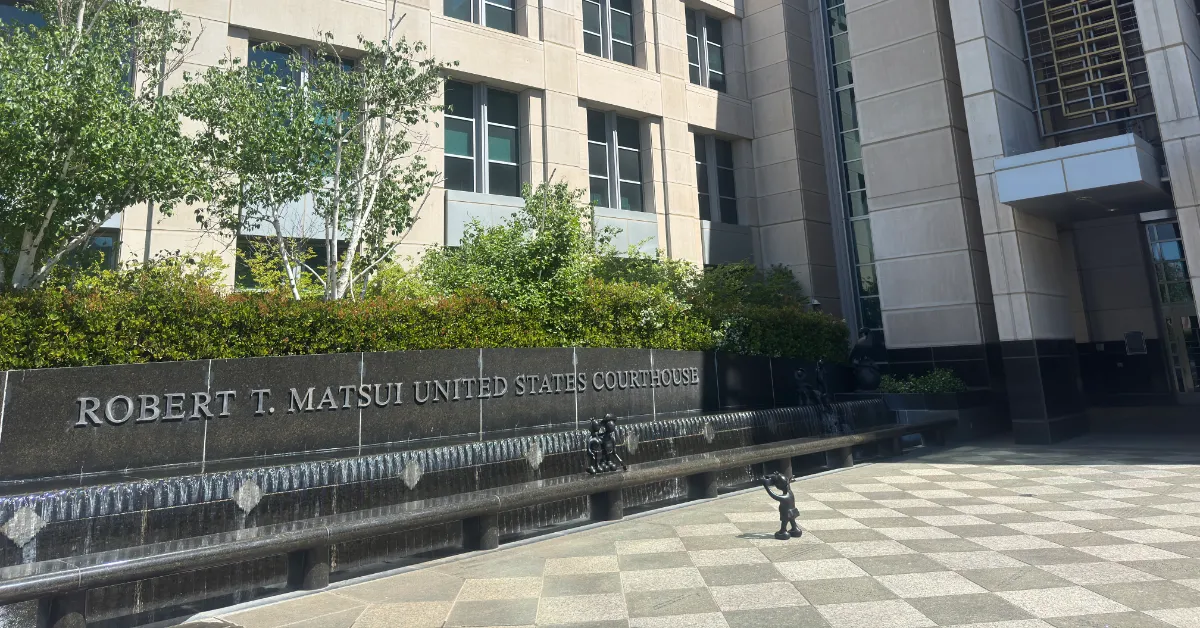
A federal judge in Sacramento extended a temporary restraining order that prevents Nexstar Media Group from fulling integrating local television stations and other businesses owned by TENGA into its company.
In a four-page order released on Friday, U.S. District Judge Troy Nunley modified certain terms of his earlier restraining order, allowing Nexstar to make “ordinary course” debt payments and to facilitate payments for salaries and expenditures involving its $6.2 billion acquisition of TEGNA, which closed in March.
The modified order, which lasts for a week, gives Nexstar the ability to ensure TEGNA can continue to operate as usual, but prohibits the companies from otherwise integrating their businesses. It continues to forbid Nexstar from acquiring sensitive business-related materials involving TEGNA’s operations, though it allows the two companies to coordinate in order for Nexstar to fulfill its obligations as a publicly-traded company, including required reporting to the U.S. Securities and Exchange Commission.
To that end, Nexstar is allowed to receive confidential information from TEGNA employees to comply with federal finance reporting rules, but it cannot keep those documents or use them for its own commercial advantages.
Nexstar is also allowed to reappoint executives and officers at TEGNA, many of whom were dismissed after the company said it had closed on its acquisition of the broadcaster. It wasn’t immediately clear if Nexstar intended to reappoint a separate chief executive or other C-level positions at TEGNA while the legal case proceeds.
The extension of the temporary restraining order comes as the judge in the case continues to weigh whether to issue a permanent injunction in the case, which would prevent TEGNA from completing its integration with Nexstar while a lawsuit brought by several state attorneys general and DIRECTV proceeds through court.
The judge’s questioning of the parties at a hearing on Tuesday, coupled with the modifications in the temporary restraining order issued on Friday, strongly suggests that the court will issue an injunction.
The modified temporary restraining order lasts through next Friday, though it could expire early if the judge renders his decision on the temporary restraining order early.
The extension is intended to allow the judge additional time to consider matters that were heard during a closed-door session at the hearing on Tuesday, during which members of the public and the media were told to vacate the courtroom.
That closed-door session allowed Nexstar and TEGNA the opportunity to discuss confidential business-related matters that were sealed by the court earlier in the legal process. Some new materials presented during the closed-door session were later submitted under seal, according to court records reviewed by The Desk.
The plaintiffs in the case allege that Nexstar’s acquisition of TEGNA violates specific federal antitrust laws because it concentrates too much power in a regulated industry with a single company. Nexstar is already the largest independent owner-operator of broadcast TV stations, with more than 200 local stations in its portfolio.
Most of Nexstar’s TV stations are affiliated with one of the “Big Four” networks — ABC, CBS, Fox or NBC. The acquisition of TEGNA brings another 60 local TV stations in 40 markets under Nexstar’s control; as with Nexstar, most of TEGNA’s TV stations are affiliated with one of the Big Four networks.
Both companies charge cable and satellite companies for the privilege of redistributing their channels to pay TV subscribers. Those redistribution fees have increased over the past year, which is the leading cause of rising cable and satellite TV bills.
Rather than acquiesce to rising fees, some pay TV providers, including DIRECTV, have opted to drop local channels owned by broadcasters for weeks or months at a time. DIRECTV has engaged in programming-related disputes with both Nexstar and TEGNA over the past three years.
DIRECTV says allowing Nexstar to acquire TEGNA will give the consolidated broadcaster greater leverage to charge its customers more for the privilege of receiving highly-prized local news and sports programming. In court on Tuesday, an attorney representing DIRECTV noted that cable and satellite companies are prohibited by law from substituting a local network affiliate with a station from another area during programming disputes. With few exceptions, the major networks are also unwilling to provide national feeds of their programming to pay TV providers, telling cable and satellite companies they need to deal with affiliates instead.
Broadcasters contend that consolidation is needed because streaming services, which are largely unregulated, continue to siphon off high-value programming like national sports. In doing so, streamers have also started to chip away at TV ad revenue that broadcasters depend upon. To make up the difference, broadcasters have acknowledged charging more money to DIRECTV and others for carriage of their channels, with executives at TEGNA saying the practice will continue.
Fees aside, several state attorneys general want the deal blocked out of concerns that allowing Nexstar greater control over more TV stations will lead to a lower investment in local news. An attorney representing the California Department of Justice on Tuesday accused Nexstar of duplicating news packages across its existing set of TV stations, and said the company told investors it plans to consolidate the newsrooms of its stations in cities where it and TEGNA own at least one station each.
An attorney for Nexstar said the company won hundreds of awards for its local journalism last year, and that consolidating multiple stations into a single operation does not necessarily decrease the output of local news.
Still, even before the lawsuit was filed, Nexstar laid off dozens of journalists at its three biggest local TV stations — one each in Los Angeles (KTLA, Channel 5), New York City (WPIX, Channel 11) and Chicago (WGN, Channel 9). A spokesperson for the company told The Desk by e-mail that the layoffs were “steps necessary to compete effectively in this period of unprecedented change,” but declined to comment further, citing “personnel issues.”
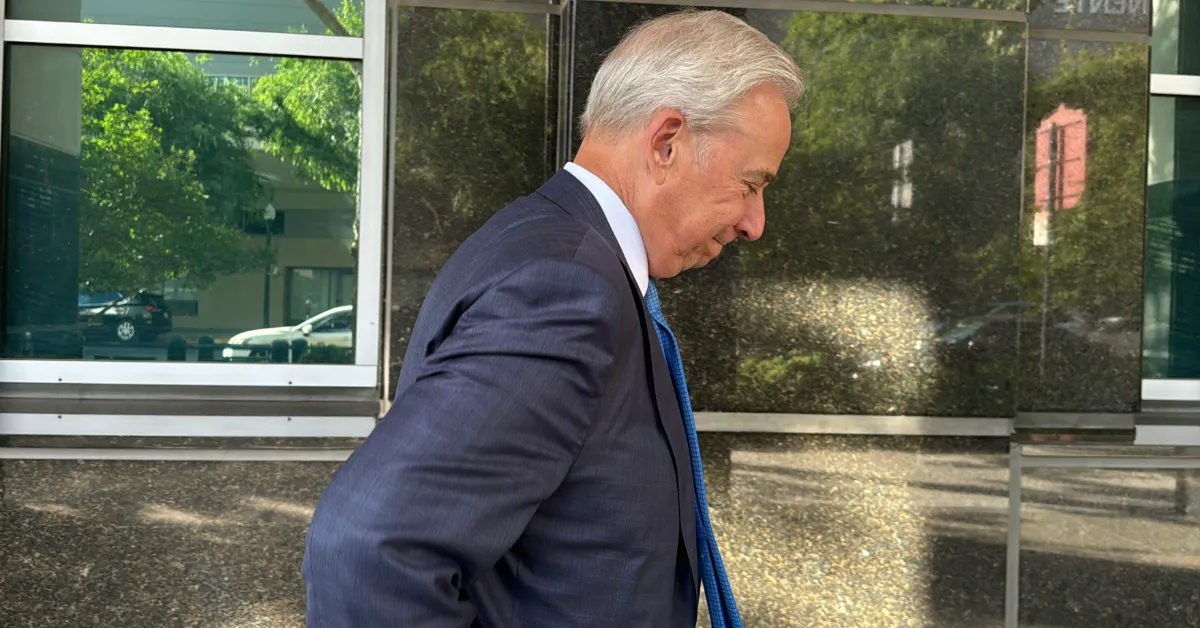
Approached outside of court on Tuesday, Nexstar CEO Perry Sook was silent when asked by this reporter if he had anything to say to journalists who were laid off from the three stations. He also declined to speak when asked if he was concerned about shareholder lawsuits if a permanent injunction was issued or the case was decided against his company’s interests.
Nexstar’s acquisition of TEGNA was first announced last summer. In February, executives from both companies told investors they expected their deal to receive federal regulatory approvals soon, with the transaction expected to close during the second half of this year.
The companies rushed to close the deal in mid-March, one day after the state attorneys general and DIRECTV filed their lawsuits and within minutes of receiving approvals from the Federal Communications Commission (FCC) and the U.S. Department of Justice (DOJ).
More Stories
- California DOJ warned Nexstar of probe into TEGNA merger before deal closed
- Federal judge delays order on injunction in Nexstar-TEGNA merger lawsuit
- Judge grants restraining order blocking Nexstar-TEGNA deal from taking effect
- States seek court restraining order to block Nexstar-TEGNA merger
- Nexstar to operate TEGNA as subsidiary business while lawsuits proceed
- Lawsuits against Nexstar will continue after company closes TEGNA deal
- FCC says it granted ownership rule waivers to approve Nexstar-TEGNA deal
- Opponents of Nexstar-TEGNA merger accuse CEO of “doublespeak”
- Report: Nexstar wants $2.75 billion bank loan for TEGNA acquisition
- Nexstar CEO: TEGNA deal expected to close in late 2026, station sales possible
- States may sue to block Nexstar-TEGNA deal
- Sinclair urges FCC to approve Nexstar acquisition of TEGNA
- FCC’s Gomez says Nexstar-TEGNA deal should get full panel vote
- CWA to make five proposals to Nexstar shareholders
- TEGNA pays $6,000 to settle FCC probe over public inspection files
- Optimum says FCC should review rule banning substitute broadcast signals during blackouts
- TEGNA ad revenue climbs 4 percent during Q4; distribution income dips
- Nexstar posts $83 million profit in 2025, despite lower overall revenue
- Nexstar lays off workers at KTLA, WPIX amid push for TEGNA merger
- Lawmakers: Nexstar-TEGNA deal will raise cable fees by $135 million